
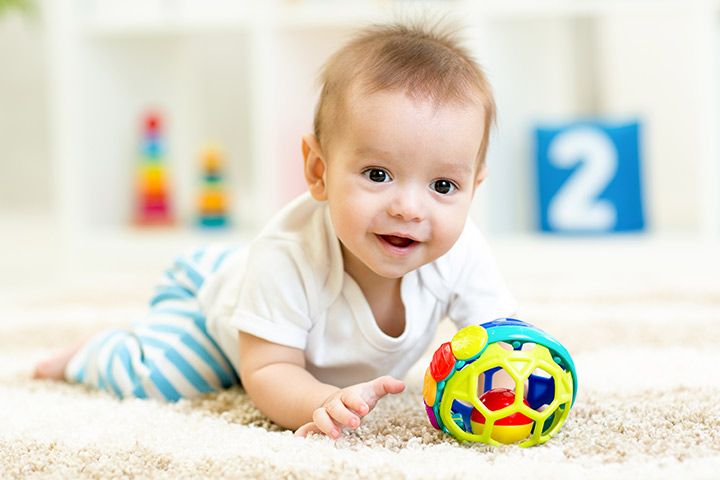
Children develop rapidly during the first five years of life. Developmental milestones from birth to five years provide a general framework for understanding how children typically develop skills related to movement, communication, thinking, social interaction, and independence. Every child develops at their own pace, so milestones should be used as general developmental guides rather than strict deadlines.
Understanding typical developmental patterns can help parents recognize emerging skills and identify situations where additional guidance or developmental screening may be helpful.
Birth to 3 Months
During the first three months, babies gradually become more aware of their surroundings and begin developing control over their movements.
Many babies begin to:
- Look at faces and respond to familiar voices
- Calm when comforted or spoken to
- Make sounds other than crying
- Smile in response to interaction
- Move their arms and legs actively
- Briefly hold their head up when placed on their tummy
- Follow objects or faces with their eyes
Tummy time while the baby is awake and supervised can support early motor development. Regular interaction, talking, singing, and responding to the baby’s sounds also support early communication.
4 to 6 Months
Between four and six months, babies often become more active and socially engaged. They may laugh, make a wider range of sounds, and show greater interest in people and objects.
Common emerging skills include:
- Holding the head steadily
- Reaching for and holding objects
- Bringing objects toward the mouth
- Rolling from tummy to back or back to tummy
- Laughing and responding to familiar people
- Showing excitement through movement and sounds
- Exploring objects with their hands
Providing safe opportunities to reach, grasp, move, and interact can support developing motor and cognitive skills.
7 to 9 Months
During this stage, babies often become increasingly mobile and curious. They may sit independently, move around in different ways, and respond more clearly to familiar words and people.
Some babies begin to:
- Sit without support
- Transfer objects from one hand to another
- Look for objects that disappear from view
- Respond to their name
- Babble using different sounds
- Show preferences for familiar caregivers
- Explore objects through touching, shaking, and banging
Simple games such as peekaboo can support social interaction and help babies understand that people and objects continue to exist even when temporarily out of sight.
10 to 12 Months
Near the first birthday, many babies become more independent in movement and communication.
They may:
- Pull themselves up to stand
- Move while holding furniture
- Pick up small objects using their fingers
- Use gestures such as pointing or waving
- Imitate sounds and actions
- Understand simple words or instructions
- Show preferences and emotions more clearly
Some children may take their first independent steps during this period, while others begin walking later. There is considerable normal variation in the timing of early walking.
1 to 2 Years
Toddlers experience major changes in movement, language, social development, and independence during the second year.
Many children begin to:
- Walk independently
- Run or climb with increasing confidence
- Use several words and gradually expand vocabulary
- Follow simple instructions
- Point to familiar objects or body parts
- Copy everyday actions
- Show affection toward familiar people
- Begin using a spoon or cup with assistance
- Show increasing interest in doing things independently
Reading together, naming objects, singing songs, and allowing toddlers to explore safely can support language and cognitive development.
2 to 3 Years
Between two and three years, children often develop stronger language and problem-solving abilities. They may begin combining words into short sentences and become more interested in playing with other children.
Emerging skills can include:
- Running and jumping
- Walking up and down stairs with assistance
- Building towers with blocks
- Turning pages in books
- Using short phrases and sentences
- Following two-step instructions
- Engaging in pretend play
- Showing a wider range of emotions
- Beginning toilet training when developmentally ready
Children at this age often want greater independence but still need consistent boundaries and adult support.
3 to 4 Years
Preschool-age children continue developing coordination, language, imagination, and social skills.
Many children can:
- Pedal a tricycle
- Jump and climb with better coordination
- Draw simple shapes or people
- Use longer sentences
- Tell simple stories
- Recognize some colors and shapes
- Participate in imaginative play
- Take turns with support
- Follow increasingly complex instructions
- Perform some dressing and self-care tasks independently
Encouraging drawing, storytelling, outdoor play, puzzles, and pretend games can provide opportunities to practise these developing skills.
4 to 5 Years
By the fifth year, children often demonstrate increased independence and more advanced communication and social abilities.
They may:
- Hop on one foot
- Catch or throw a ball more accurately
- Draw recognizable people and objects
- Use more detailed sentences
- Tell stories with a clear sequence
- Recognize numbers or letters
- Follow household or classroom routines
- Play cooperatively with other children
- Show greater understanding of rules
- Complete simple self-care tasks
Children continue developing concentration, emotional regulation, problem-solving, and independence during this stage.
Supporting Development at Home
Parents can support development through everyday activities rather than relying only on structured learning. Talking with children, reading regularly, singing, playing, drawing, exploring outdoors, and allowing age-appropriate independence can all provide valuable learning opportunities.
Healthy nutrition, adequate sleep, physical activity, safe environments, and regular health check-ups also contribute to overall development.
It is helpful to focus on progress rather than comparing children with siblings or peers. Development can occur at different rates across different areas.
When Developmental Concerns Need Attention
A missed milestone does not automatically mean that a child has a developmental disorder. However, persistent concerns, loss of previously acquired skills, or significant differences in communication, movement, social interaction, hearing, or learning should be discussed with a pediatrician.
Developmental screening can help identify areas that may need closer observation or additional support. Early identification can provide opportunities for appropriate evaluation and intervention when needed.
Dr. Nikil Sudarsan is a highly experienced Pediatrician in Dubai, dedicated to providing comprehensive healthcare for infants, children, and adolescents. With expertise in Pediatric Neurology, Child Development, Autism, ADHD, Epilepsy, Genetics, and Developmental Disorders, he offers personalized, evidence-based care tailored to each child’s unique needs. Using the latest medical advancements and a family-centered approach, Dr. Nikil Sudarsan focuses on promoting healthy growth, early diagnosis, effective treatment, and long-term well-being, ensuring the best possible outcomes for every child.