
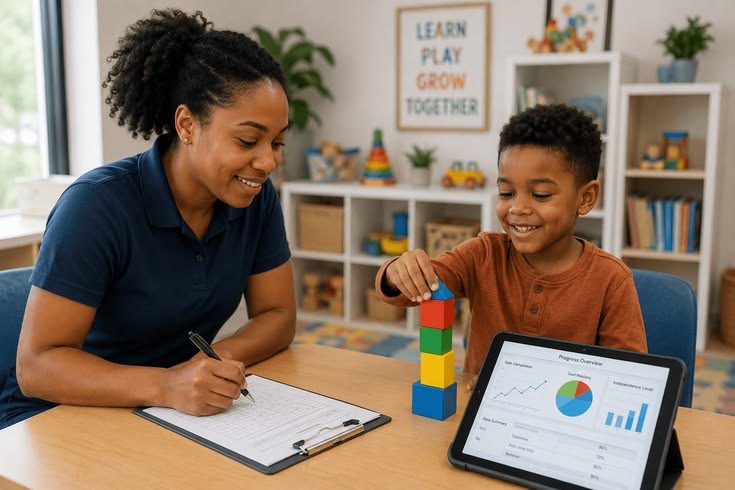
Tracking developmental milestones helps parents understand how their child is growing, learning, communicating, moving, and interacting with others. Every child develops at a different pace, so milestone tracking should be used as a guide rather than a strict checklist. Regular observation can help parents recognize progress, understand individual differences, and identify areas where additional support may be useful.
Development includes several areas, including physical movement, communication, cognitive skills, social interaction, emotional development, and everyday self-care abilities. Parents can monitor these areas through normal daily activities without turning development into a stressful routine.
Understand the Main Developmental Areas
Before tracking milestones, it is helpful to understand what child development involves. Physical development includes skills such as sitting, walking, running, and using the hands. Communication includes understanding language, making sounds, using words, and participating in conversations.
Cognitive development involves learning, remembering, exploring, problem-solving, and understanding concepts. Social and emotional development includes interacting with others, expressing feelings, responding to people, and developing relationships. Adaptive skills involve everyday abilities such as eating, dressing, using the toilet, and following simple routines.
Looking at all these areas gives parents a broader picture of their child’s development.
Use Age-Appropriate Milestone Guides
Milestone guides can help parents understand skills commonly seen at different ages. These guides may include abilities that many children demonstrate within a particular developmental period.
Parents should remember that milestones are not exact deadlines. Children may reach individual skills earlier or later than their peers. A child who takes more time to master one skill may still be developing appropriately overall.
Instead of focusing on whether a child achieved a milestone on a specific date, parents can look at overall progress and whether new skills are gradually emerging.
Observe Your Child During Everyday Activities
Daily routines provide many opportunities to track development. Parents can observe how a child plays, communicates, eats, moves, responds to instructions, and interacts with family members.
For example, during play, parents can notice whether the child explores toys, imitates actions, solves simple problems, or engages in pretend play. During meals, they can observe fine motor skills, independence, and communication.
These everyday observations can provide more meaningful information than occasional testing because children are often most comfortable and natural in familiar environments.
Keep a Simple Developmental Record
Parents can maintain a simple notebook, digital note, or milestone checklist to record new skills. The record does not need to be complicated.
Parents may note when a child first uses a new word, begins walking independently, follows a new instruction, feeds themselves, or starts participating more actively in social play.
Recording the date and a short description can make it easier to notice patterns over time. Videos or photographs may also help parents remember changes in movement, communication, and play when discussing development with a healthcare professional.
Track Progress Rather Than Comparing Children
Comparing children can create unnecessary worry because development naturally varies. Siblings, classmates, and friends may reach milestones at different times.
One child may develop language skills quickly but take longer with physical coordination. Another may be physically active while developing communication skills more gradually.
The goal of milestone tracking is not to determine which child is ahead. It is to understand an individual child’s strengths, progress, and areas that may require attention.
Pay Attention to Communication Skills
Communication is an important part of developmental tracking. Parents can observe whether their child responds to their name, makes sounds, uses gestures, understands simple instructions, develops words, and gradually combines words into more complex communication.
Parents should also pay attention to nonverbal communication, including eye contact, pointing, facial expressions, gestures, and attempts to interact with others.
If communication skills appear to stop progressing or a child loses previously developed communication abilities, parents should discuss these concerns with a healthcare professional.
Observe Social and Emotional Development
Social and emotional milestones can be tracked through everyday interactions. Parents can observe how children respond to familiar people, express emotions, participate in play, manage frustration, and respond to changes in routine.
Young children are still learning emotional regulation, so occasional tantrums and difficulty sharing are common. Over time, children generally develop better ways to communicate their needs and manage feelings.
Consistent difficulties with social interaction, emotional responses, or relationships may be worth discussing during a developmental assessment.
Monitor Physical and Motor Skills
Gross motor skills involve large movements such as walking, running, jumping, climbing, and balancing. Fine motor skills involve smaller movements such as picking up objects, turning pages, drawing, using utensils, and manipulating toys.
Parents can observe these abilities during play and daily routines. Activities such as building blocks, drawing, outdoor play, and age-appropriate physical games can also provide opportunities to observe coordination and progress.
Watch for Loss of Previously Learned Skills
One important part of developmental monitoring is noticing regression. If a child stops using a skill they previously had, parents should take the change seriously and seek professional advice.
Examples may include losing previously used words, becoming less socially responsive, or losing an established physical or self-care ability.
Developmental regression does not automatically indicate a specific condition, but it deserves appropriate evaluation rather than being ignored.
Discuss Concerns During Regular Health Visits
Parents do not have to wait until a concern becomes significant before discussing it. Regular pediatric or healthcare visits provide opportunities to review developmental progress.
Parents can bring their milestone records, observations, videos, or specific examples to appointments. Instead of saying that a child is simply “behind,” describing exactly what the child can and cannot do can provide more useful information.
A healthcare professional may recommend developmental screening or further assessment when appropriate.
Create a Supportive Environment
Milestone tracking works best when combined with activities that encourage development. Reading, talking, singing, playing, exploring, and involving children in simple daily tasks can support learning and communication.
Parents can also encourage independence by allowing children to try age-appropriate activities while providing assistance when needed. Positive reinforcement can help children develop confidence as they learn new skills.
Understanding When Professional Support Is Helpful
Parents should consider seeking professional guidance when a child consistently struggles to develop expected skills, shows significant difficulties in one or more developmental areas, or loses skills they previously acquired.
Early evaluation can help identify a child’s strengths and areas where additional support may be beneficial. Depending on individual needs, support may involve developmental guidance, speech and language therapy, occupational therapy, physical therapy, educational support, or other services.
Dr. Nikil Sudarsan is a highly experienced Pediatrician in Dubai, dedicated to providing comprehensive healthcare for infants, children, and adolescents. With expertise in Pediatric Neurology, Child Development, Autism, ADHD, Epilepsy, Genetics, and Developmental Disorders, he offers personalized, evidence-based care tailored to each child’s unique needs. Using the latest medical advancements and a family-centered approach, Dr. Nikil Sudarsan focuses on promoting healthy growth, early diagnosis, effective treatment, and long-term well-being, ensuring the best possible outcomes for every child.