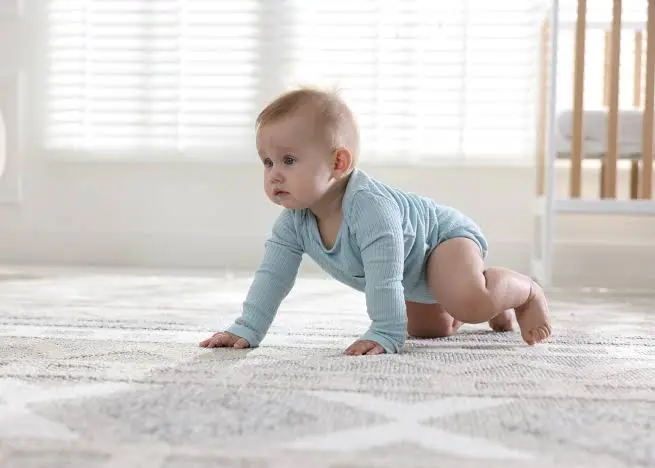
One of the most exciting milestones in a baby’s early development is learning to crawl. Crawling marks the beginning of independent movement, allowing babies to explore their surroundings, build strength, and develop coordination. For many parents, this stage is both joyful and a little anxious as they watch their child become more mobile.
Understanding When Do Babies Start Crawling? helps parents know what to expect, recognize normal developmental variations, and support their baby’s physical growth in a healthy way. While every baby develops at their own pace, crawling typically follows a predictable pattern of early motor development.
Typical Age When Babies Start Crawling
Most babies begin to crawl between 6 to 10 months of age, although this can vary widely.
Some important points to remember:
- Some babies start as early as 5–6 months
- Others may crawl closer to 10–12 months
- Some babies may skip crawling entirely and move directly to walking
There is no strict rule, as motor development differs from child to child.
Early Signs That Crawling Is Approaching
Before babies start crawling, they usually show several developmental signs.
1. Improved Head Control
By around 3–4 months, babies gain better control of their head and neck, which is essential for movement.
2. Rolling Over
Between 4–6 months, babies begin rolling from stomach to back and back to stomach, building core strength.
3. Sitting Independently
By 6–8 months, many babies can sit without support, which strengthens balance and posture.
4. Pushing Up on Arms
During tummy time, babies start pushing their upper body off the ground, strengthening shoulders and arms.
5. Rocking on Hands and Knees
Before crawling, babies often get into a hands-and-knees position and rock back and forth.
These signs indicate that crawling is likely to begin soon.
Different Types of Crawling
Not all babies crawl the same way. There are several styles of crawling that are completely normal.
Classic Crawl
- Hands and knees movement
- Alternating arm and leg coordination
Commando Crawl
- Baby drags body using arms
- Legs stay mostly on the ground
Bear Crawl
- Baby moves on hands and feet
- Knees are lifted off the floor
Bottom Shuffling
- Baby sits and moves forward using legs and hands
Each style helps babies build strength and coordination.
Why Crawling Is Important for Development
Crawling is more than just movement—it plays a key role in physical and cognitive development.
Builds Muscle Strength
Crawling strengthens:
- Arms
- Legs
- Shoulders
- Core muscles
Improves Coordination
It helps babies learn how to coordinate both sides of the body.
Enhances Brain Development
Cross-body movement supports communication between brain hemispheres, improving learning and spatial awareness.
Develops Balance and Posture
Crawling helps babies prepare for standing and walking.
Encourages Exploration
Mobility allows babies to explore their environment, supporting curiosity and learning.
How Parents Can Encourage Crawling
Parents can support crawling development in simple and safe ways.
1. Tummy Time
Regular tummy time strengthens neck, shoulder, and core muscles.
2. Place Toys Slightly Out of Reach
Encourage movement by placing toys just beyond reach.
3. Create a Safe Space
Ensure the floor area is clean, soft, and free of sharp objects.
4. Encourage Movement
Place the baby on the floor rather than keeping them in carriers or seats for long periods.
5. Use Positive Interaction
Crawling motivation increases when parents engage and encourage movement.
When to Be Concerned
While development varies, some signs may require medical advice.
Consult a pediatrician if:
- Baby shows no attempt to move by 10–12 months
- There is very limited arm or leg movement
- Baby seems unusually stiff or floppy
- Loss of previously gained skills occurs
Early evaluation can help rule out developmental concerns.
Can Babies Skip Crawling?
Yes, some babies skip crawling entirely and move directly to standing and walking. This is usually not a cause for concern if other developmental milestones are met.
However, crawling is still beneficial for muscle and brain development, so encouraging it is helpful when possible.
Supporting Overall Motor Development
Crawling is part of a broader set of motor milestones.
Parents should also support:
- Rolling
- Sitting
- Standing
- Walking
- Fine motor skills (grasping objects)
A balanced approach helps ensure healthy physical development.
Dr. Nikil Sudarsan is a highly experienced Pediatrician in Dubai, dedicated to providing comprehensive healthcare for infants, children, and adolescents. With expertise in Pediatric Neurology, Child Development, Autism, ADHD, Epilepsy, Genetics, and Developmental Disorders, he offers personalized, evidence-based care tailored to each child’s unique needs. Using the latest medical advancements and a family-centered approach, Dr. Nikil Sudarsan focuses on promoting healthy growth, early diagnosis, effective treatment, and long-term well-being, ensuring the best possible outcomes for every child.