
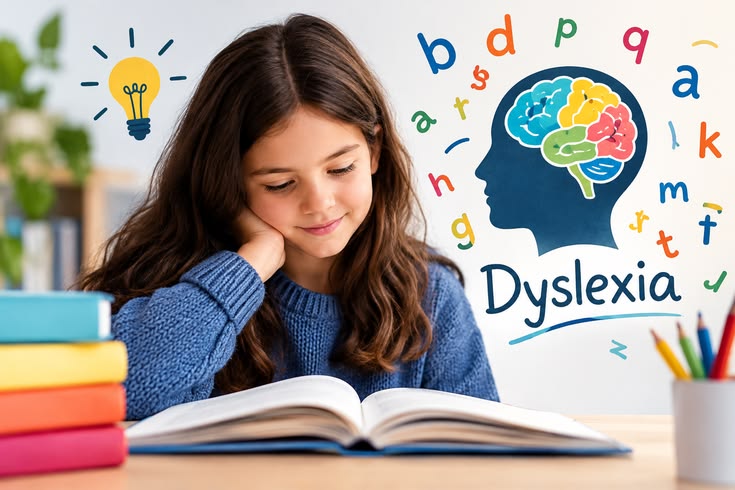
Learning to read is one of the most important milestones in a child’s education. While many children develop reading skills with practice and instruction, some face ongoing challenges despite receiving appropriate teaching and support. One common reason is dyslexia, a learning difference that affects reading and language processing. Understanding Dyslexia and Reading Difficulties helps parents, teachers, and caregivers recognize early signs, provide effective support, and encourage children to reach their full potential. With early identification and appropriate interventions, children with dyslexia can become confident and successful learners.
What Is Dyslexia?
Dyslexia is a specific learning disorder that primarily affects reading accuracy, reading fluency, spelling, and decoding skills. It is neurological in origin and is not caused by poor intelligence, lack of motivation, vision problems, or inadequate teaching.
Children with dyslexia often have difficulty connecting letters with their corresponding sounds, making it harder to recognize words and read fluently. However, many children with dyslexia have average or above-average intelligence and possess strengths in creativity, problem-solving, and critical thinking.
Understanding Dyslexia and Reading Difficulties allows families to focus on a child’s strengths while providing targeted educational support.
Common Signs of Dyslexia
The signs of dyslexia vary depending on a child’s age and development. Some common indicators include:
- Difficulty learning letter names and sounds
- Slow or inaccurate reading
- Trouble recognizing familiar words
- Difficulty spelling common words
- Mixing up similar-looking letters such as b and d
- Reading slowly or hesitantly
- Avoiding reading activities
- Difficulty following written instructions
- Trouble remembering sequences such as days of the week or the alphabet
Having one or two of these signs does not necessarily mean a child has dyslexia, but persistent difficulties should be discussed with a healthcare or educational professional.
What Causes Dyslexia?
Research suggests that dyslexia is related to differences in how the brain processes language. It often runs in families, indicating a strong genetic component.
Several factors may contribute, including:
- Family history of dyslexia or learning disorders
- Differences in brain development related to language processing
- Genetic influences
Importantly, dyslexia is not caused by poor parenting, lack of intelligence, or insufficient effort.
How Dyslexia Affects Learning
Children with dyslexia may find reading more challenging than their peers, which can also affect other areas of learning.
Possible challenges include:
- Reading comprehension
- Written expression
- Spelling
- Vocabulary development
- Learning foreign languages
- Completing homework
- Classroom participation
With the right teaching strategies and accommodations, these challenges can often be managed successfully.
Early Identification Is Important
Early recognition is one of the most effective ways to support children with dyslexia. Identifying reading difficulties during the preschool or early primary school years allows interventions to begin before children fall significantly behind academically.
Early support can improve:
- Reading accuracy
- Reading confidence
- Academic performance
- Self-esteem
- Communication skills
Parents and teachers should seek guidance if a child’s reading skills do not progress as expected.
How Dyslexia Is Diagnosed
There is no single medical test for dyslexia. Diagnosis usually involves a comprehensive evaluation by qualified professionals, which may include:
- Developmental history
- Educational assessments
- Reading and language evaluations
- Cognitive testing
- Hearing and vision screening to rule out other causes
A thorough assessment helps identify the child’s learning profile and guides individualized support.
Effective Support Strategies
Children with dyslexia benefit from structured, evidence-based reading instruction tailored to their needs.
Helpful approaches include:
- Phonics-based reading instruction
- Multisensory learning techniques
- Reading practice with guided support
- Breaking tasks into smaller steps
- Providing extra time for reading and writing assignments
- Using audiobooks when appropriate
- Encouraging regular reading at home
Consistency and patience are essential for helping children build reading skills.
Supporting Children at Home
Parents play a valuable role in encouraging literacy and confidence.
Ways to help include:
- Reading aloud together every day
- Celebrating effort rather than perfection
- Creating a quiet reading environment
- Encouraging discussions about stories
- Using educational games that develop language skills
- Maintaining regular communication with teachers
Positive encouragement helps children develop resilience and a love of learning.
Emotional Well-Being Matters
Children with reading difficulties may experience frustration, anxiety, or reduced self-confidence, especially if they compare themselves with classmates.
Parents and educators can support emotional well-being by:
- Recognizing strengths beyond academics
- Offering praise for progress
- Setting realistic goals
- Encouraging hobbies and interests
- Avoiding criticism about reading mistakes
Building confidence is just as important as improving reading skills.
When Should Parents Seek Professional Help?
Parents should consider professional evaluation if their child:
- Continues to struggle with reading despite appropriate instruction
- Has significant difficulty learning letter sounds
- Frequently avoids reading
- Falls behind classmates in literacy skills
- Experiences ongoing spelling difficulties
- Shows frustration or anxiety related to reading
Early evaluation allows children to receive appropriate educational support and accommodations.
Dr. Nikil Sudarsan is a highly experienced Pediatrician in Dubai, dedicated to providing comprehensive healthcare for infants, children, and adolescents. With expertise in Pediatric Neurology, Child Development, Autism, ADHD, Epilepsy, Genetics, and Developmental Disorders, he offers personalized, evidence-based care tailored to each child’s unique needs. Using the latest medical advancements and a family-centered approach, Dr. Nikil Sudarsan focuses on promoting healthy growth, early diagnosis, effective treatment, and long-term well-being, ensuring the best possible outcomes for every child.